


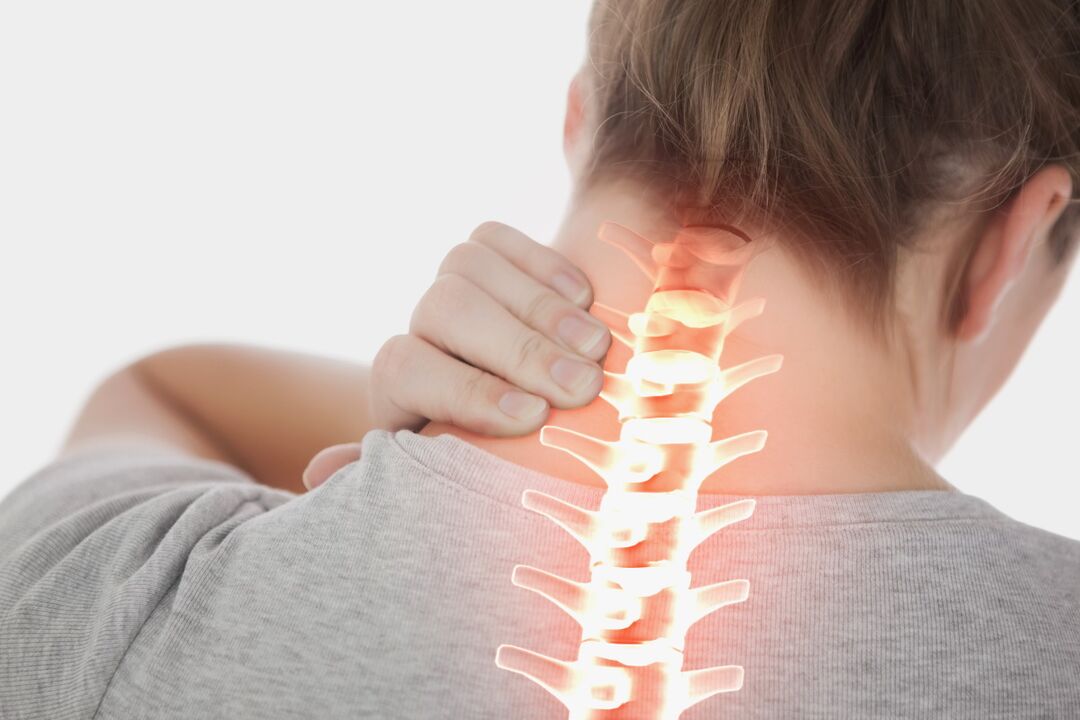
Back pain is a problem that every adult can face.Often this is not a one-time occurrence, but a symptom of a dangerous disease.Osteochondrosis often occurs in people aged 30-35 (about 40% of the population), up to 90% of cases occur in old age.
Timely diagnosis and correct approaches to treatment can eliminate the development of pathology and prevent complications.That is why it is important to understand what exactly back pain can indicate, which doctor you should contact when it appears and how to treat osteochondrosis.
What is osteochondrosis?
Osteochondrosis is a group of chronic diseases, the cause of which is the destruction of vertebrae and intervertebral discs, as well as damage to cartilage tissue.
With age and under the influence of uneven loads, the bone tissue of the vertebrae is deformed and destroyed, and the muscle tissue develops unevenly.This leads to various manifestations of osteochondrosis: hernia, curvature of the spine, etc.
Osteochondrosis is an outdated term;in world medicine it is referred to as dorsopathy. There are different types of diseases of the connective tissue and the musculoskeletal system, for which different treatment methods are used.
Types of osteochondrosis
During the classification of the disease, the following are taken into account: the location of the pain, the area of damage to the intervertebral discs and the degree of development of the disease.
Localization of painful sensations
Considering the location of pain caused by diseases of the spine, there are:
- Lumbodynia.Chronic pain in the lower back often causes lameness.In particularly severe cases, it can cause numbness in the legs.Most often, this symptom appears when a person has an intervertebral hernia.When the roots of the spinal cord are compressed, paralysis of the limbs is possible.
- Lumboischialgia.Pain that radiates painful sensations in the lower back or lower limbs, along the back of the legs - from the buttocks to the knee.Clinical manifestations occur when there is pressure on the sciatic and spinal nerves.
- Lumbago.Shooting or acute intense pain at a certain point in the lower back.It is often confused with radiculitis.An attack in most cases occurs when a person tries to bend sharply or straighten the back, as well as when suddenly lifting heavy objects.
- Thoracalgia.Pain in the chest area.It is considered a very dangerous symptom, sometimes even a doctor cannot immediately determine its cause.Unpleasant sensations are not always associated with body movements.The pain is especially strong in the area from the chest to the armpit.
- Cervicalgia.Painful sensations occur in the neck area and can spread to the upper limbs.Pathological manifestations can be accompanied by dizziness, a feeling of numbness in the back of the head, redness and swelling of the skin.
Pathology requires urgent treatment, as there may be a disruption of blood circulation in the brain, compression of nerve roots and disruption of venous blood flow.Cervicalgia often provokes inflammatory processes and herniation of intervertebral discs.
The location of the most painful sensations indicates the area of damage to the vertebrae and intervertebral discs.Often the pain is reflected, that is, it is not registered in the place where the source of the disease is actually located.
Classification by location
Depending on which part of the spine the damage to the discs and intervertebral tissues has occurred, osteoporosis is divided into several types.
Cervix
It consists of seven small vertebrae that experience constant stress.The pathology is associated with thinning of the cervical vertebrae and compression of the arterial channels.The cervical type of osteochondrosis is very dangerous, because it causes an interruption in the process of blood saturation in the brain.
The formation of protrusions leads to a hernia.And operations performed in the cervical region can lead to immobilization of the body.
breast
Disorders in this part of the spine are rare, which is associated with low mobility of the vertebrae.The appearance of pain is observed in people who move loads, or in those who stand in one position for a long time.
Thoracic osteochondrosis is often confused with pneumonia, heart attack and angina.
Important!
Only a doctor should be involved in the differential diagnosis.
Lumbosacral
The midsection has five vertebrae.If there is a disruption of nutrition and metabolic processes in the intervertebral disc, it loses elasticity, decreases in size and is no longer able to function taking into account the load received.Lack of treatment for lumbosacral osteochondrosis can cause the following complications: hernias, protrusions, sciatica.
Important!
A very dangerous phenomenon is compression of the spinal cord, as it can cause paralysis of the lower extremities.
Another type of osteochondrosis is polysegmental.During its development, the degradation of segments in different parts of the spine occurs simultaneously.The disease is characterized by the loss of sensation in the back of the head and disorders in the functioning of the speech apparatus.
Features of the development of the disease
According to the degree of change in the intervertebral discs, experts distinguish 4 stages of pathology, diagnosed using radiographic studies:
- There are no visible changes in the spine.
- Internal tears occur in discs, but no external changes.
- Disc changes are noted without external damage.
- Severe injuries of the intervertebral disc.Cracks spread to the inner surface, the disc seems to have been squeezed out of the vertebrae.
Taking into account the clinical manifestations, four stages of the development of osteochondrosis are distinguished:
- The back works as usual.A person feels pain at the location of the disease.Patients complain of general weakness, chronic fatigue and less often, loss of appetite and sleep disturbances.
- Cracks form in the disc and the spinal segment loses stability.Painful sensations intensify, initially once, later - chronically, which is accompanied by compression of nerves, subluxation of the vertebrae and the formation of protrusions.
- The pain intensifies even more, deformation of the spine occurs and an intervertebral hernia is formed.At the same stage, lordosis develops, a curvature of the spine.
- The spine loses its normal mobility.Cartilage tissue thickens and osteophytes (cartilaginous growths in joints) appear.In particularly difficult cases, patients lose the ability to move.
Important!
A person diagnosed with the fourth stage of osteochondrosis receives disability.
Causes of osteochondrosis
There are a large number of theories that explain the appearance of pathology.Among the reasons are hormonal changes, heredity, problems in the cardiovascular system, mechanical damage, etc.Researchers agree that most often the reason lies in the overloading of individual segments of the spine.
The human spine has 32-34 vertebrae (7 cervical, 12 thoracic, 5 lumbar, 5 sacral, 3-5 coccygeal).Each segment consists of two vertebrae and an intervertebral disc between them.The integrity of this structure is ensured by joints and articular processes.
The intervertebral discs consist of a jelly-like core and a dense fibrous ring surrounding it, which are covered on top by a layer of cartilage tissue.They perform a shock-absorbing function, preventing damage to the vertebrae during jumping, running and walking.The design is highly mobile and provides flexibility and stability to the spine.
Already in the first stage of osteochondrosis, the degradation and destruction of the intervertebral discs begins, the amount of fluid in their core decreases, the cartilage tissues become thinner and less elastic.
Osteochondrosis in most cases is diagnosed in the elderly, as well as in those who lead a sedentary lifestyle.Doctors believe that the main cause of the disease is the uneven distribution of the load on the spine and vertebrae.This causes their damage, as well as the destruction of cartilage tissue.
Most often, this disorder occurs due to a sedentary lifestyle, irregular exercise, excessive physical activity and work that is accompanied by constant pressure on the back.
Incorrect body position when walking, sitting, carrying and lifting heavy objects, tight and uncomfortable clothes and shoes can cause damage/displacement of the intervertebral discs and, as a result, lead to the development of osteochondrosis.
Other reasons for the development of pathology include:
- fractures, curvatures and injuries of the spine;
- hormonal imbalances;
- pregnancy;
- hypothermia and sudden temperature changes.
Important!
Straining the cervical spine while working at the computer can also cause the development of osteochondrosis.
Risk factors for the development of osteochondrosis
There is a large list of diseases that can lead to osteochondrosis.These include:
- flat feet;
- scoliosis;
- arthritis;
- osteoporosis;
- arthrosis;
- neuro-emotional fatigue;
- diabetes mellitus;
- obesity.
Other risk factors include metabolic disorders, intense physical activity (especially associated with lifting weights), lack of nutrients, natural age-related changes in the body and genetic predisposition.
Regular use of tobacco (smoking) and alcohol significantly weakens the intervertebral disc tissue.Calcium deficiency can be a factor in the development of the disease.
Symptoms and signs of osteochondrosis
Painful sensations are the main symptom of the pathology.The nature of the pain can change, it can be:
- acute, intense, worsens with movement (as a rule, the patient tries to stay still);
- dull, quiet (movements are slow).
In addition to local pain exactly where the destruction of the vertebrae and intervertebral discs began, patients often experience projection pain - away from the problem site.Due to the pain, muscle strength decreases in the lower and upper extremities, movement disorders and general weakness in the body appear.
Patients often complain of such general symptoms of osteochondrosis as:
- stiffness and discomfort during movement;
- muscle spasm;
- migraine and headache;
- frequent dizziness, visual disturbances;
- the appearance of pain in the joints of the limbs;
- feeling of coldness in the extremities;
- decreased sensitivity;
- blood circulation disorders;
- loss of consciousness.
In some cases, patients experience numbness in the limbs and tingling in the cervical region, lumbar region and sternum.
With osteochondrosis, several characteristic syndromes are often present:
- Vertebral.Acute or chronic back pain, which is accompanied by poor circulation.
- Cardiac.A form of angina.
- Vertebral artery syndrome.Pain resulting from blood circulation disorders in the vertebral arteries.
- Koreshkovy.The pain is provoked by the compression of the spinal roots in the places where they branch off from the spinal cord.
Depending on the type of osteochondrosis in the location, the symptoms of the disease may vary.
For cervical osteochondrosischaracterized by migraines, numbness of the fingers, difficulty in moving the head and neck, pain in the back of the head.In addition, with cervical osteochondrosis, patients complain of facial numbness, sleep problems, frequent dizziness and ringing in the ears.
Lumbar osteochondrosiscauses pain in the buttocks and perineum, which causes problems with movement.Patients experience acute pain when bending over, in the lower back (after sleeping or sitting in one place for a long time).Numbness, dizziness and general weakness appear.The disease often causes pain in the kidney area, erectile dysfunction and frequent urination.With lumbar osteochondrosis, scoliosis often develops.
Thoracic osteochondrosisaccompanied by shortness of breath, stiffness in chest region, pain between shoulders and ribs.Often patients are concerned about problems in the gastrointestinal tract, kidneys and pancreas.Specific manifestations of thoracic spine pathologies include dry skin, flaky skin on the extremities, and brittle nails.
Osteochondrosis: diagnosis
You should consult a doctor (vertebrologist or neurologist) if you feel back pain (of any kind), muscle spasms and sensory disturbances in the back and limbs.
No additional preparation is required to visit a neurologist or vertebrologist.It is important to give your doctor a list of pain medications you have recently taken.It is also necessary to report all measures taken during self-treatment before scheduling a consultation.
During your appointment, the doctor will perform a comprehensive examination, which includes:
- collection of anamnesis, study of the patient's medical history and complaints;
- physiological examination, palpation, assessment of skin condition and localization of pain;
- determining the nature of the pain (acute, dull, reflected, local, etc.);
- blood test (indicators of calcium level in blood and erythrocyte sedimentation rate are important);
- ECG and ultrasound of the heart (to exclude or confirm the connection of pain syndromes with diseases of the cardiovascular system);
- duplex scan of the arteries of the head and neck (assessment of the quality of blood flow, determination of vasoconstriction).
To confirm the diagnosis, additional radiographic studies may be prescribed, which include:
- X-ray of the spine.A complete image in two projections, if necessary, filming each individual segment of the spine.Functional radiography may also be prescribed - a study in which a specialist takes pictures in different positions of the body.
- Computed tomography of an individual disc.The study shows the condition of the vertebral body, blood vessels, nerve endings, ligaments and soft tissues, ruptures in the contours of the intervertebral disc, disc height, changes in the dura mater, marginal growth and vertebral instability.
- Myelography.X-ray contrast of the spinal cord.
- Magnetic resonance imaging.This is an alternative to the CT scan of the intervertebral disc.It allows you to assess the condition of blood vessels and cartilage tissue.
X-ray studies confirm that this is osteochondrosis if the images show:
- pathological mobility of the vertebrae, deviating from the norm;
- displacement of vertebrae in relation to each other;
- deposition of salts in the intervertebral discs;
- uniform narrowing of the intervertebral space in the lumbar and cervical regions, wedge-shaped narrowing in the thoracic region;
- formation of osteophytes (marginal growth);
- marginal sclerosis is the formation of a compaction in the affected disc.
As part of the diagnosis, the doctor may prescribe a consultation with another specialist (ENT specialist, cardiologist, urologist, etc.).
Important!
The main task of a diagnostician is to determine the causes of osteochondrosis.Depending on the results obtained during the examination, the doctor will determine the type of pathology and prescribe the appropriate therapy in a particular case.
Complications of osteochondrosis
Osteochondrosis of the spine is an unpleasant disease, which in its final stages can cause the development of other diseases and pathologies.The most common are:
- prolapse (bulging of the intervertebral discs);
- intervertebral hernia;
- salt deposits between the vertebrae;
- kyphosis (curvature of the spine);
- muscle atrophy;
- spinal stroke (circulation disorder in the spinal cord);
- radiculitis;
- disruption of the functioning of the genitourinary system (problems with urination, erectile dysfunction in men, inflammatory processes in the uterus, ovaries and appendages in women);
- paralysis of limbs.
Timely consultation with a doctor at the first painful sensation and regular prevention of osteochondrosis will help to avoid the development of complications.
Treatment of osteochondrosis
At the Naran clinic, doctors practice an integrated approach to the treatment of osteochondrosis.
Tibetan medicine practitioners use four treatment methods:
- Correction of nutrition according to dosha
- Lifestyle correction
- Herbal medicine
A set of external procedures:
- Nutrition correction.A balanced diet according to the structure of the human body (dosha) promotes an increase in energy and cell renewal in all organs and organ systems of the body.
- Phytotherapy.The use of Tibetan medicinal herbs and mixtures based on the recipes of ancient healers.It restores the natural balance in the body, promotes its rejuvenation and the disappearance of many diseases.
External effects on the body:
- energy acupressure - normalizes and restores adequate functioning of internal organs, helps improve blood circulation throughout the body, restores immunity;
- acupuncture - eliminates pain and inflammation, relieves discomfort caused by external manifestations, improves fluid circulation in the body;
- vacuum therapy (cupping) - improves innervation, removes waste and toxins, normalizes regulatory and metabolic processes;
- stone therapy - useful for the cardiovascular system, blood pressure, relieves muscle spasms, restores sleep;
- Moxibustion, moxibustion or jutherapy of biologically active points has been used in Tibetan medicine for more than 5 thousand years.Cigars made from wormwood, edelweiss, juniper, poplar leaves, as well as pressed coal etc. are used for burning or heating.
Prevention of osteochondrosis
The main method of prevention is the equal distribution of the load on the back.In practice this includes:
- active lifestyle;
- moderate exercise (morning exercises, yoga, swimming, walking, running, cycling, exercises to strengthen the muscular corset);
- sleeping on an orthopedic mattress and pillow;
- wearing comfortable, or even better, orthopedic shoes;
- balanced diet, including a large amount of minerals and vitamins;
- regular preventive examinations by a neurologist and vertebrologist;
- quitting smoking and alcohol.
During prolonged sitting and stationary work, it is important to periodically take breaks, change position and do a warm-up, this will help you relax and reduce the load on your back.
When you lift weights, you don't need to do it quickly, in a hurry, just smoothly and in half squats.To carry heavy items, it is better to choose backpacks with orthopedic wall rather than shoulder strap bags.
Avoid long standing in a static, uncomfortable position, especially on your feet and with your arms raised - this position damages the ligaments and increases the load on the intervertebral discs.
Important!
Doctors recommend sitting in a physiologically correct position: relaxed shoulders, toned abdominal muscles, equal weight distribution on both buttocks and a straight spine position with equal emphasis on the back of the chair.
Manual therapy, various physiotherapy methods and acupuncture also give positive results as a preventive measure for osteochondrosis of the spine.
The treatment of osteochondrosis consists of three stages:
- Relief or reduction of pain.
- Elimination of disturbances in the condition and functioning of intervertebral discs and vertebrae.
- Prevention of complications.
If you immediately consult a specialist at the first signs of the disease, you can avoid complications and the need for surgical treatment.That is why it is so important to undergo annual preventive examinations with a neurologist and vertebrologist, even if you are not bothered by pain in the spine.
Important!
Only a qualified doctor can make an accurate diagnosis, determine the disease and its causes and prescribe effective treatment.